Clear Land Without Destroying Soil Structure
Forestry Mulching in Lockhart for overgrown acreage, fence line clearing, and trail development
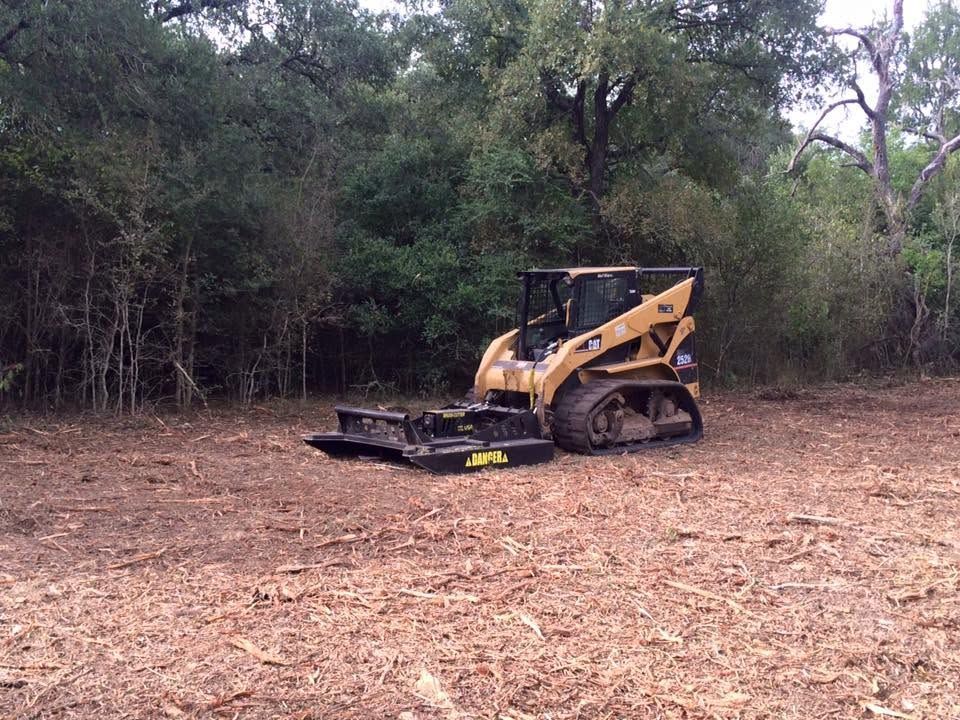
Dense brush and unwanted vegetation restrict property access, create fire hazards, and prevent productive land use on residential, ranch, and agricultural properties. Forestry mulching processes standing vegetation into organic ground cover in a single pass, eliminating the need to pile, haul, or burn cleared material. Graham Construction & Land Clearing uses professional mulching equipment to clear fence lines, trails, overgrown pasture, and wooded acreage across Lockhart and Central Texas, leaving a layer of shredded mulch that controls erosion and decomposes naturally. The process causes minimal ground disturbance compared to bulldozing or root removal, which preserves topsoil structure and prevents the deep ruts and compaction that inhibit future vegetation growth.
Mulching equipment grinds brush, saplings, and small trees at ground level, distributing the shredded material evenly across the cleared area. This approach eliminates burn permit requirements, reduces dust and airborne debris, and completes projects faster than traditional clearing methods that involve multiple steps and equipment types.
Schedule a property assessment to evaluate your clearing needs and receive a free estimate based on acreage and vegetation density.
What Forestry Mulching Accomplishes
The mulching process selectively clears unwanted growth while leaving desirable trees and vegetation intact, which allows property owners to improve access and visibility without creating a barren landscape. The resulting mulch layer suppresses weed regrowth, retains soil moisture, and adds organic matter that improves soil health as it decomposes. Cleared areas remain stable during rain events because the mulch layer absorbs impact and slows runoff, preventing the erosion that often follows conventional clearing.
After mulching, you'll notice improved sight lines, easier movement across previously impassable areas, reduced tick and pest habitat, and a natural appearance that doesn't resemble bulldozed or scraped ground. Properties cleared with mulching techniques recover vegetation faster and support more diverse plant communities compared to sites where topsoil is removed or heavily compacted. For ranch operations, clearing fence lines and pasture edges with mulching equipment improves livestock management without creating the mud zones that develop around cleared areas during Central Texas's heavy rain periods.
Forestry mulching is suitable for projects ranging from narrow trail corridors to hundreds of acres, with equipment capable of processing vegetation up to several inches in diameter. The method works well for preparing building sites, creating firebreaks, reclaiming overgrown pasture, and improving aesthetics on properties where maintaining a natural look is important.
Questions About Mulching Projects
Property owners planning vegetation management projects often want to understand how mulching compares to other clearing methods and what results to expect.
What types of vegetation can forestry mulching remove?
Brush, brambles, saplings, small trees, tall grass, and woody undergrowth are all processed effectively, though very large trees or stumps may require different equipment depending on project goals.
How does mulching compare to bulldozing or burning?
Mulching leaves topsoil intact and undisturbed, eliminates the need to haul debris or obtain burn permits, and completes clearing faster because material doesn't need to be piled or removed from the site.
Will the mulch layer prevent new growth from returning?
The mulch suppresses many weed species and slows regrowth, but some aggressive plants may require follow-up treatment; in Lockhart's climate, the mulch layer also moderates soil temperature and moisture, which influences what grows back.
Can forestry mulching work around existing trees or structures?
Yes, equipment can selectively clear areas while avoiding desirable trees, fences, buildings, and other features that need to remain undisturbed.
How long does a forestry mulching project take?
Acreage cleared per day depends on vegetation density and terrain, but most projects progress significantly faster than traditional methods that involve cutting, piling, and hauling or burning material.
Graham Construction & Land Clearing provides forestry mulching services for properties throughout Central Texas, offering efficient vegetation management that preserves soil health and maintains natural site aesthetics. Contact the team to discuss your clearing project and receive a free estimate based on your property's specific conditions and objectives.